


I believe we’re all writers, whether we admit it or not. Some of us start scribbling stories in the margins of school notebooks, others keep journals full of teenage angst, and some don’t pick up the pen in any meaningful way until much later. The starting line is different for everyone, and so is the pace. Just as some kids belt out songs before they can tie their shoes, others—like me—take a little longer to find the words.
Even before we can match letters to sounds, we’re already telling stories. As children, we draw houses with crooked chimneys and stick figures with wild hair, and we’re trying—clumsily but earnestly—to capture a world we don’t yet know how to spell. My own path into writing was delayed. I didn’t really learn to read well until I was about sixteen. Once I caught up, I wrote in bursts, as many of us do: long stretches of silence broken by sudden floods of words. I wrote the most when I was in love—when feelings spilled over and demanded to be put somewhere. And then I stopped. Life crept in, as it does, and writing became practical, professional, and technical. I wrote reports, not reflections.
It’s only in these last few years that I’ve returned to writing with any kind of devotion. And the difference? I’m no longer trying to impress a teacher, a boss, or an audience. I’m writing for myself. That shift has been the secret. Once I stopped aiming for approval and started listening to what I wanted to say, the words came easier. Writing became less about performance and more about discovery.
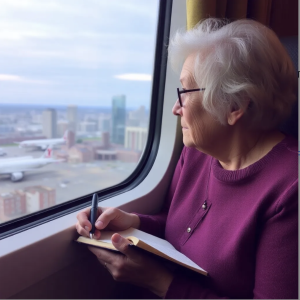 When I write now, it feels like I’m in conversation with myself—a conversation I didn’t even know I’d been longing to have. And maybe that’s the quiet gift of writing later in life: the courage to say, “This is for me,” and the grace to let that be enough.
Travel reading habits reveal a great deal about us. Some people toss a thriller in their carry-on and blaze through it on the flight, forgetting the plot before they land. Others pack a guidebook and only skim the “Top 10 must-see” list, never flipping to the quirky history in the back. And then some tuck a slim book of poetry into their day bag, pulling it out in a plaza or on a park bench, letting the words mingle with the world around them.
How we read on the road mirrors how we travel. If you’re a skimmer, you might also be the type to dash through five cities in ten days. If you’re a lingerer, you might stay a week in one neighbourhood, reading both your book and your surroundings slowly. Neither is wrong, but each leaves a different imprint.
Sometimes, I think the books we choose on trips become part of the landscape—Hemingway in Spain, Mavis Gallant in Montreal, a mystery novel in a rainy café in Dublin. The page and the place talk to each other, and suddenly both become unforgettable.
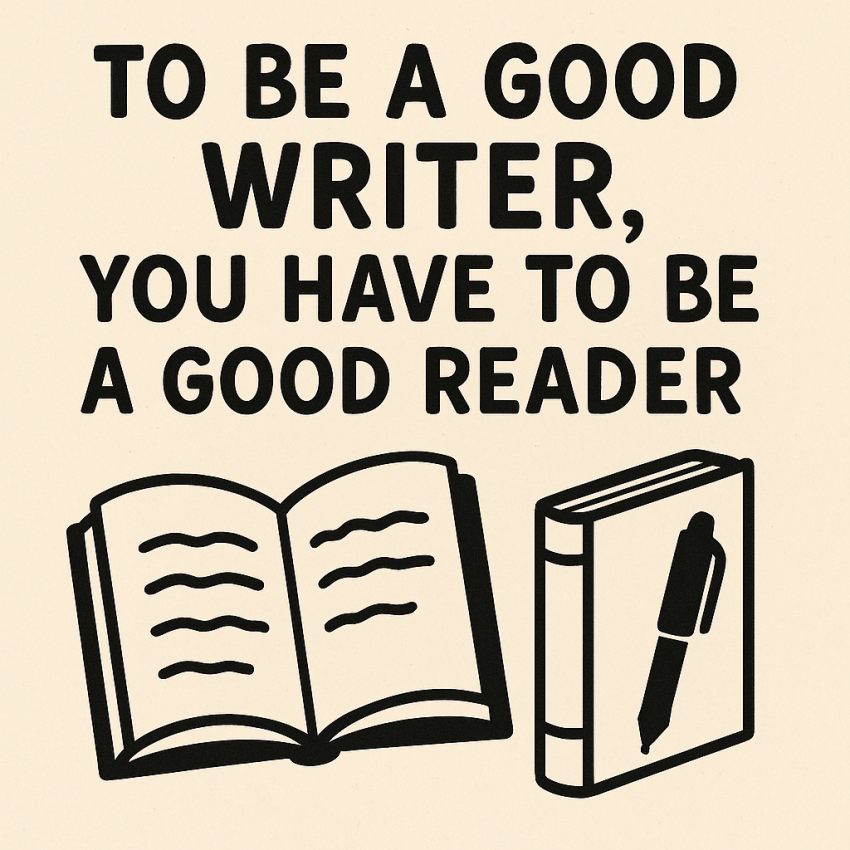
To be a good writer, you must be a good reader, not just in the sense of devouring books like candy, although that helps. It’s about paying attention. Reading trains your ear for rhythm, your eye for detail, and your heart for empathy. When you read widely, you start to notice the small choices other writers make—the turn of phrase that feels like velvet, the sentence that punches you in the gut, the quiet pause that makes you lean in. Those choices become tools you can carry into your own work.
Confession: I am still not a great reader, and I prefer non-fiction.
 Travel has taught me the same thing. If I’m only rushing through a place, I see nothing but postcards. But when I linger—when I “read” a city slowly, taking in its footnotes, its margins, its misspellings—I start to catch the details that make the story real. Writing is no different. The best way to learn how to tell your story is to spend time inside other people’s stories.
If you’re a bad reader, your writing shows it. Skimming instead of pondering makes your sentences flat, like instant soup without seasoning. You start leaning on clichés because you haven’t fed your imagination with anything fresher. You miss nuance, so your characters or reflections come out thin, like cardboard cutouts instead of people with pulse.
It’s a bit like travel. If you never look up from your phone, you’ll come home saying every city felt the same—just another airport, another hotel, another forgettable meal. But if you’ve trained yourself to read carefully—streets, faces, silences—you notice the subtle differences: the way Lisbon smells faintly of grilled sardines, or how Paris waits two beats longer before changing a traffic light.
Bad readers write in a rush. Good readers know how to pause.
Here’s the good news: becoming a better reader doesn’t mean tackling a 1,000-page Russian novel (unless that thrills you). It means reading with intention, the way a traveller lingers in a side street instead of just following the tour group.
A few ways to train your “reader’s eye” so your writing gets sharper:
-
Read like a thief — Notice how other writers begin and end paragraphs. Borrow tricks shamelessly.
-
Slow down — Instead of racing through, pick one page and reread it. Ask why a sentence works (or doesn’t).
-
Switch genres — Memoir teaches intimacy, poetry teaches rhythm, travel guides teach clarity. Mix them up.
-
Annotate your margins — A scribbled “wow” or “ugh” reminds you what hit home and what fell flat.
-
Read aloud — Your ear catches clunky phrasing your eyes might forgive.
It’s less about how many books you’ve read and more about how deeply you’ve read them. Writing improves when you treat reading as practice, not a pastime.
Writing for yourself is a lot like travelling for yourself. When you plan a trip around other people’s expectations—Instagram shots, family approval, guidebook checklists—you end up exhausted, lugging home memories that feel more borrowed than lived. The same goes for writing. If every word is angled toward what others will think, you forget to listen to your own voice.
Travel taught me this lesson early. The best journeys weren’t the ones where I ticked off all the “must-sees,” they were the ones where I wandered into a back alley, stumbled on a mural, or lingered in a café with no agenda. Writing is no different. The moments that matter come when you’re not performing, but paying attention—capturing what you notice, not what you think others expect to hear.
There’s freedom in that. A private notebook is the literary version of a solo trip: no audience, no itinerary, just you discovering what you actually care about. And just as the best trips leave you changed in small, almost secret ways, so does writing for yourself. The discoveries may not impress anyone else, but they’re the ones that stay with you.